
Crawl space moisture control in Charlotte, NC
Moisture control is not one product. It is the question of which of four sources is putting water into your crawl space, because each one has a different answer and buying the wrong one is how people end up doing this twice.
Who handles crawl space moisture control in Charlotte, NC?
Charlotte Crawl Space Contractor arranges crawl space moisture control across Charlotte and the surrounding counties, beginning with an evaluation that identifies which moisture source is actually driving the problem before anything is specified. Call (704) 419-8494 to arrange an evaluation.
Four sources, four different fixes
Nearly all crawl space moisture arrives by one of four routes, and the reason diagnosis matters is that the correct fix for one does essentially nothing for another.
- Ground vapor. Moisture evaporating continuously off bare soil. Fixed by covering the ground with a properly detailed barrier.
- Humid outside air. Warm moist air entering through the vents and condensing on cool surfaces. Fixed by sealing the space and controlling humidity — not by more ventilation.
- Liquid water. Surface water or groundwater entering the space. Fixed by drainage and by correcting grade, gutters and downspouts outside.
- Interior sources. Plumbing leaks, a dryer venting into the crawl space, or an air conditioning condensate line discharging under the house. Fixed by finding and correcting the specific source.
Why venting works against you here
The traditional foundation vent exists on the theory that moving air dries a space. That theory holds when the incoming air is drier than the air inside.
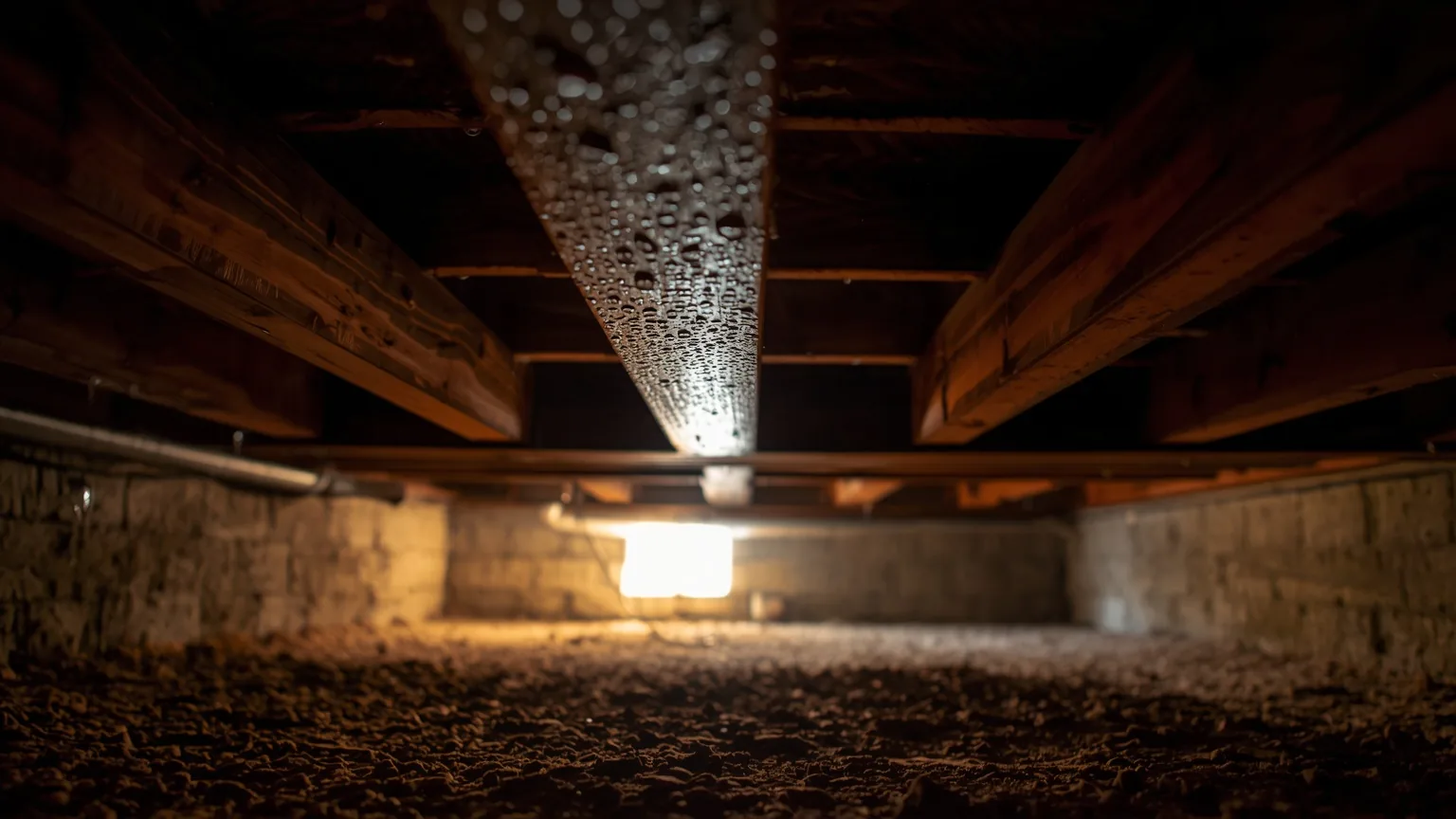
In a Charlotte summer it frequently is not. Warm outdoor air carries a great deal of moisture, and the crawl space is one of the coolest parts of the house. When that air enters and meets ductwork, water lines and the underside of the subfloor sitting below its dew point, the moisture condenses out onto them.
This is why adding vents to a damp crawl space so often fails to help and can make matters worse, and why North Carolina's residential code contains provisions for closed crawl spaces rather than treating ventilation as the only permissible approach.
What the moisture is actually doing
Wood begins supporting fungal growth at roughly 20 percent moisture content. Framing is not damaged by one humid week — it is damaged by months spent above that threshold, which is why the damage is usually well advanced by the time anyone notices it.
The other half is that the crawl space does not stay in the crawl space. Air moves upward through a house, so a meaningful share of what you breathe on the ground floor started underneath it. That is the mechanism behind a musty smell that returns every summer, and behind indoor humidity an air conditioner struggles to bring down.
How the pieces fit together
Moisture control is a sequence rather than a product, and each step assumes the previous one has been done.
Liquid water is dealt with first, because nothing installed over active water works. Then the ground is covered, removing soil evaporation. Then the space is sealed against outside air, removing the condensation mechanism. Then whatever moisture load remains is managed mechanically, sized to the sealed space rather than to the unsealed one.
Done in that order each step is smaller and cheaper than it would be alone. Done out of order, each step has to fight the one that should have come before it.
What you can check yourself
Before anyone quotes anything, there are things worth looking at from above ground, and they are free.
Walk the perimeter during or just after heavy rain. Note where downspouts discharge and whether it is at the foundation. Look at whether the ground within the first several feet falls away from the house or toward it. Check whether the gutters are actually clearing rather than overflowing at a blockage.
Charlotte's clay-rich Piedmont soils absorb water slowly — the USGS puts infiltration at roughly 6 to 15 centimeters per hour — so water that arrives faster than that travels across the surface to wherever the grade sends it. Correcting that is the cheapest work in this entire subject and it is frequently part of the answer.
The Charlotte season that tells you which source you have
Charlotte sits in a humid subtropical climate, with long stretches of warm, moisture-heavy air from late spring through early fall. The practical consequence is that a crawl space here is frequently at its worst in midsummer rather than immediately after heavy rain.
That timing is the cheapest diagnostic you have. A space that is wet only after a storm has a liquid water problem. A space that is wet right through August regardless of the weather has a humidity problem. They are different sources, and they are fixed with different work in a different order.
Crawl Space Moisture Control questions
What causes moisture in a crawl space?
Four things, in rough order of how often they turn out to be the main driver here: humid outside air condensing on cool surfaces, evaporation from bare soil, liquid water entering from surface runoff or groundwater, and interior sources such as plumbing leaks or a dryer venting under the house. Most problem crawl spaces have more than one, which is why the diagnosis determines the scope.
Should I open or close my crawl space vents?
In this climate, opening vents in humid weather generally brings in more moisture than it removes, because the incoming air is wetter than the crawl space air and the crawl space is cooler. That is the reasoning behind sealed and dried crawl space assemblies. But a space with combustion appliances or active water in it cannot simply be closed up without addressing those first.
What humidity level should a crawl space be at?
Low enough that the framing stays comfortably below roughly 20 percent moisture content, which is the threshold where fungal growth becomes possible. Rather than fixing on a single humidity number, the more useful question to ask a contractor is what the wood is reading now, what it should read, and how the proposed work changes it.
Can crawl space moisture affect the air in my house?
Yes, and this is frequently what brings people to look at it. Air moves upward through a building, so a share of the air in your living space came from the crawl space. That is the mechanism behind a musty smell on the ground floor that returns each summer and behind indoor humidity that the air conditioner does not seem to resolve.
Is a dehumidifier enough for crawl space moisture control?
Only after the space is sealed. In a vented crawl space a dehumidifier runs against an unlimited supply of outdoor humidity, which costs money continuously and does not win. It is the last step in the sequence rather than a substitute for the earlier ones.
How do I know if my crawl space moisture problem is serious?
The distinguishing measurement is moisture content in the framing rather than how the space looks or smells. Sustained readings above roughly 20 percent are what lead to decay. Visible signs worth acting on are fallen or matted insulation, condensation on ducts and pipes, growth on joists, standing water, and floors that have begun to feel soft or slope.
Related crawl space services
Crawl Space Encapsulation
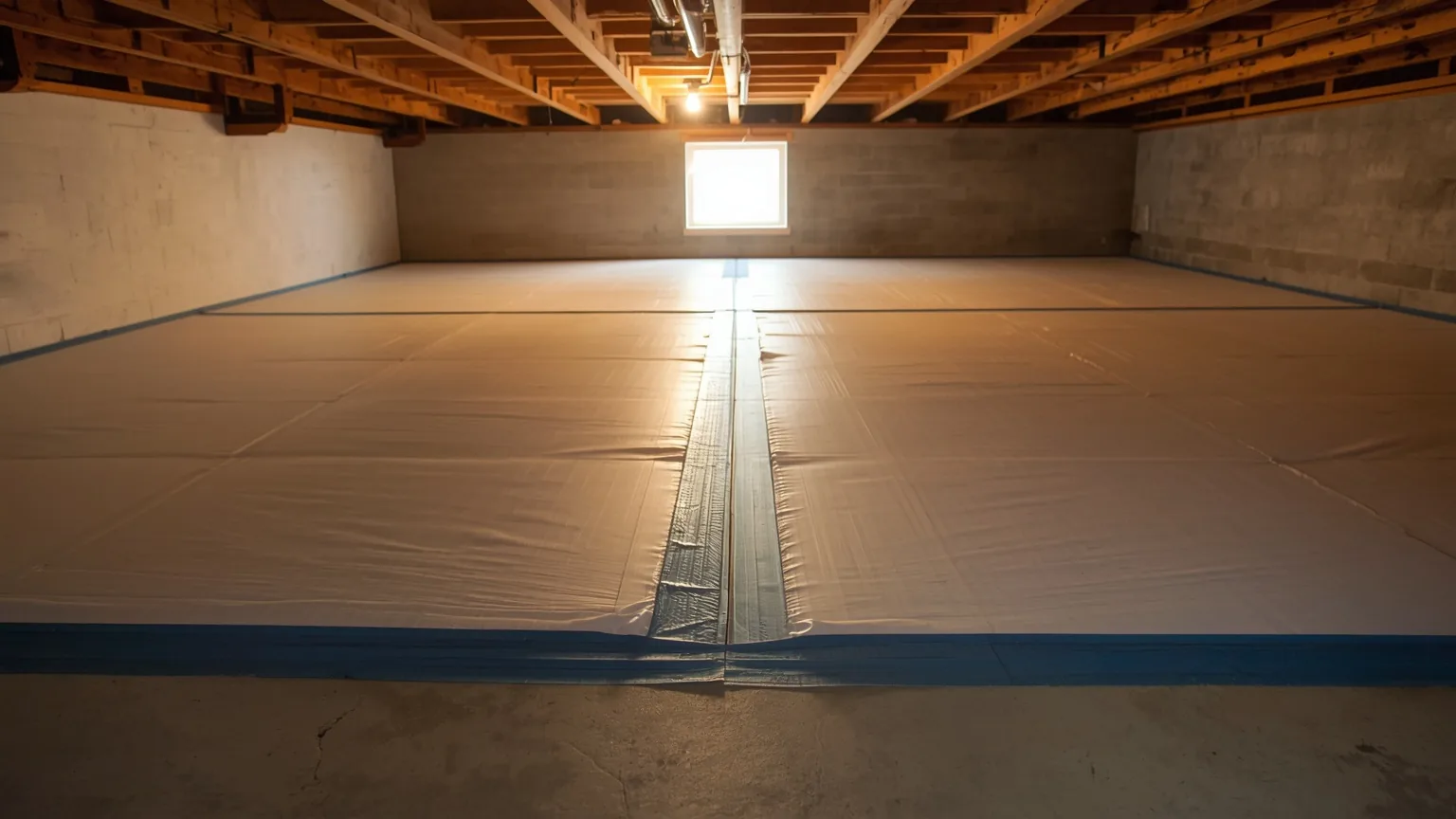
Encapsulation seals the crawl space off from the ground and from outside air, then controls the humidity of what is left. It is the right answer for a chronically damp crawl space and the wrong answer for one that is actively flooding.
Crawl Space Dehumidifier Installation
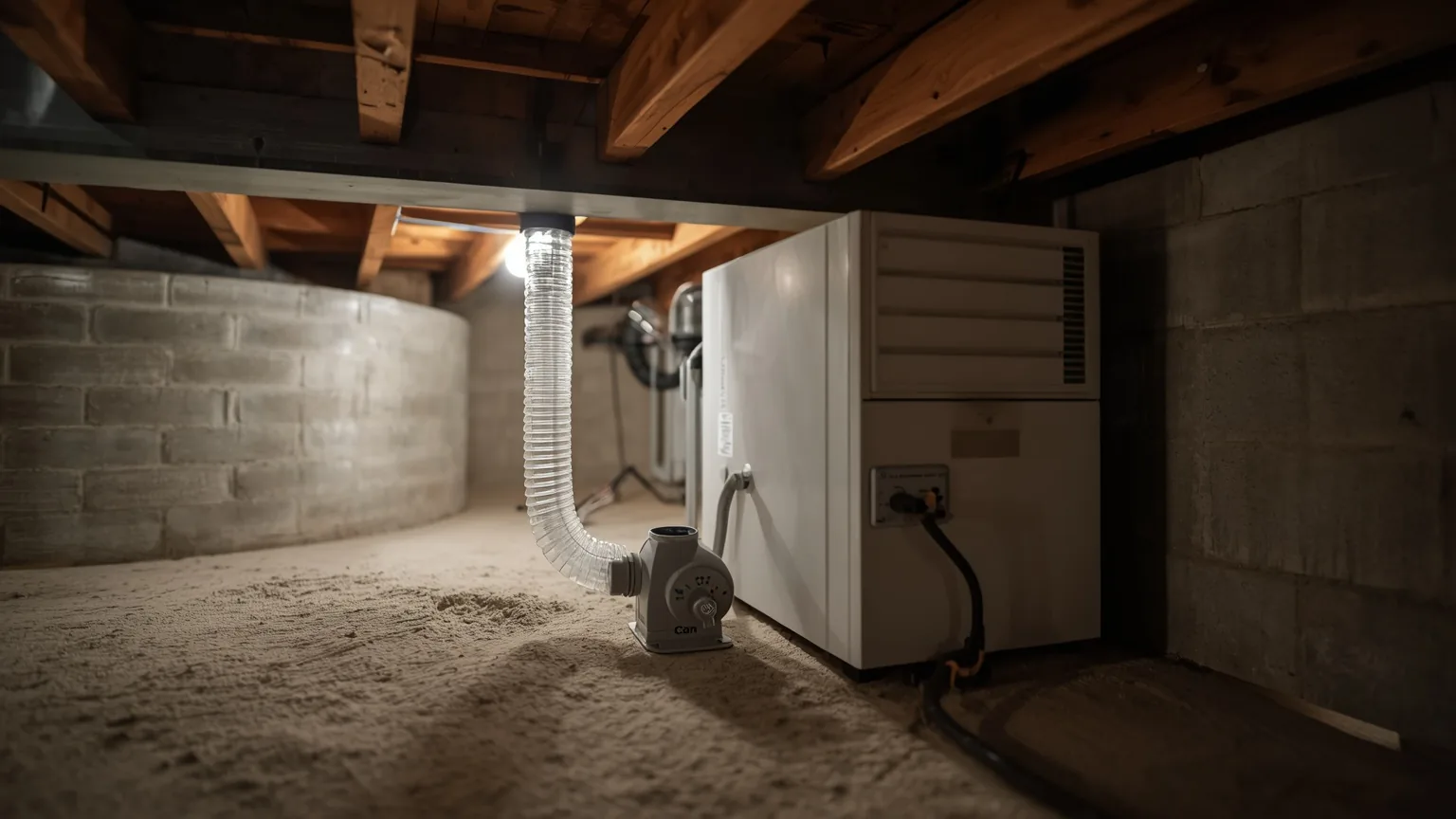
A crawl space dehumidifier is not a portable unit set on the dirt with an extension cord running to it. It is a permanently installed appliance with a condensate drain, sized to the space it is drying.
Vapor Barrier Installation
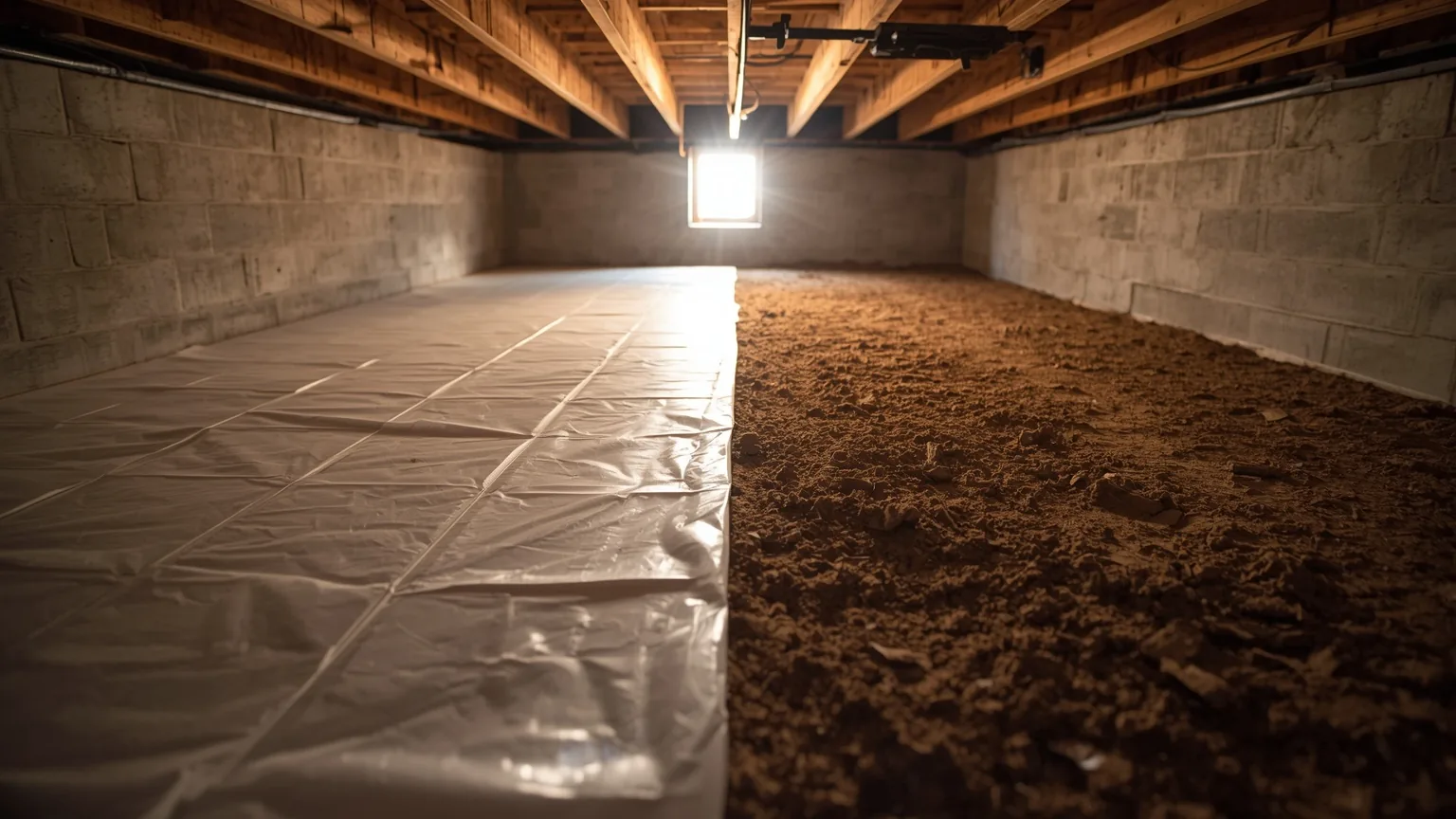
Ground cover cuts off the moisture rising out of the soil. It is a real and useful thing to install, and it is also routinely sold as though it were encapsulation, which it is not.
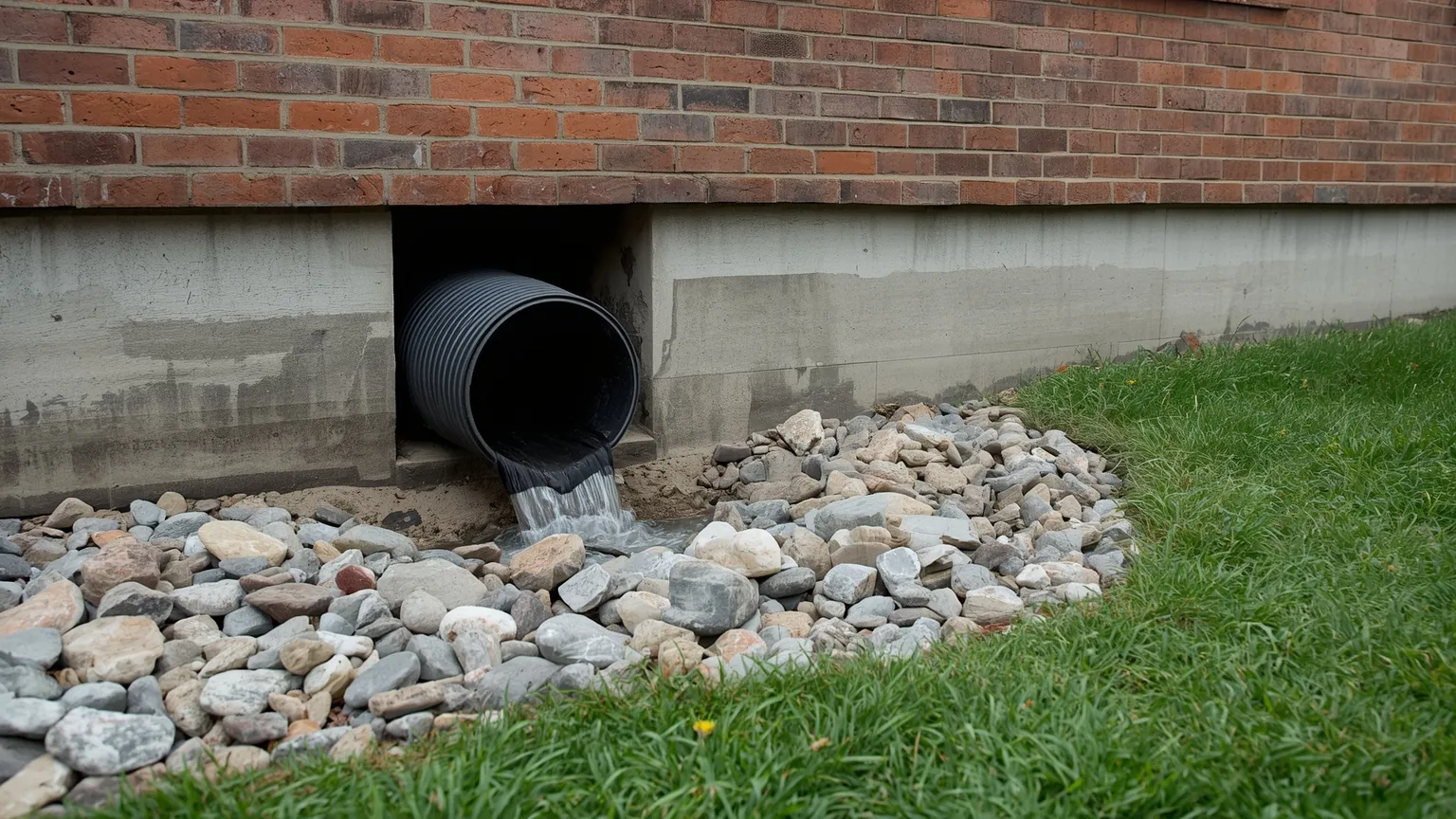
Crawl Space Drainage
Drainage is what you install when water is genuinely arriving as liquid. In Charlotte a good share of those problems start at the gutters and the grade, which is worth establishing before anything is dug.
Find out what is actually causing it.
Someone gets under the house, takes moisture readings, and writes the scope down before a price exists.