
Crawl space dehumidifier installation in Charlotte, NC
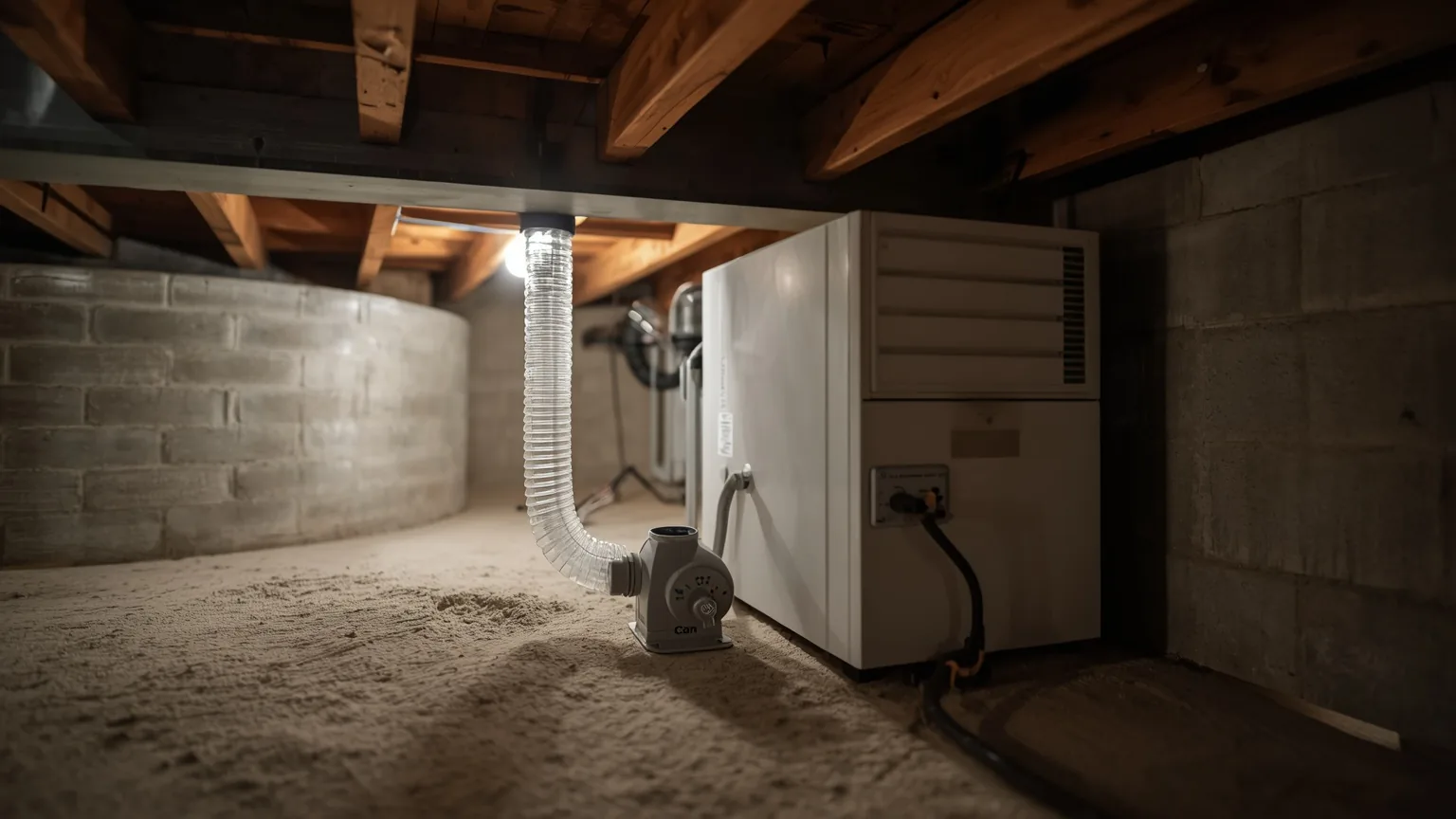
A crawl space dehumidifier is not a portable unit set on the dirt with an extension cord running to it. It is a permanently installed appliance with a condensate drain, sized to the space it is drying.
Who handles crawl space dehumidifier installation in Charlotte, NC?
Charlotte Crawl Space Contractor arranges professional crawl space dehumidifier installation across Charlotte and the surrounding counties — unit sizing, placement, hard-piped condensate drainage and humidistat control, installed as part of a sealed assembly rather than as a standalone fix. Call (704) 419-8494 to arrange an evaluation.
Why a dehumidifier comes last, not first
A dehumidifier only ever treats the air. It is very good at that and completely indifferent to where the water came from.
Put one into a vented crawl space and it will run continuously against an unlimited supply of humid outdoor air, cost money to do it, and never win. Put one into a crawl space with standing water and it will work against continuous evaporation off the surface. In both cases the unit is doing its job and the outcome is still poor.
The sequence that works is: stop liquid water, seal the space against ground vapor and outside air, then install humidity control sized to what remains. A dehumidifier proposed as the first and only intervention in an unsealed crawl space is treating the symptom with the meter running.
Sizing, and why it is not guesswork
Capacity is rated in pints of water removed per day, and matching it to the space is a real calculation rather than a rule of thumb.
The inputs are the volume of the sealed space, how well it is actually sealed, the remaining moisture load, and the temperature it will operate at. That last one matters more than homeowners expect — crawl spaces run cool, and a unit rated at warm-room conditions performs differently down there. A unit designed for crawl space temperatures is not the same product as a room dehumidifier with a higher pint rating.
Undersized, it runs constantly and still leaves humidity high. Oversized, it short cycles, which is hard on the equipment and no better at controlling humidity.
The parts of the installation that get skipped
Most of what distinguishes a proper installation from a unit dropped through the hatch is in the connections.
- Condensate drainage. The unit produces water continuously and it has to go somewhere reliable — gravity to daylight, into a sump, or to a condensate pump. A hose ending on the liner is not a drain.
- Placement. Positioned so air actually circulates through the space rather than short-circuiting around the unit, and where it can be reached for filter service.
- Power. A dedicated circuit rather than an extension cord run from a convenience outlet. This is frequently the item quietly excluded from a quote.
- Humidistat control. Set to a sensible target rather than left running continuously, so the unit cycles on need instead of on the clock.
- Support off the ground. Hung or set on a stand rather than sitting directly on the liner, so a condensate leak or any water present is not sitting under the equipment.
- Serviceability. Filters need cleaning. If reaching the unit means crawling thirty feet on your stomach, it will not happen, and an unmaintained dehumidifier stops performing.
Do you actually need one?
Not every encapsulated crawl space requires a dehumidifier, and it is fair to ask the question rather than accept it as automatic.
A very well sealed space, with the ground fully covered, no liquid water and a modest moisture load, can sometimes hold acceptable humidity without mechanical drying. In this climate that is the less common outcome, but it happens.
The honest way to decide is to seal properly, then measure. A contractor who can explain what humidity they expect the sealed space to hold, and what the plan is if it does not, is describing a system. One who includes a dehumidifier without reference to the space's actual moisture load is describing a package.
Why the crawl space decides how the house feels
Air moves upward through a house. A meaningful share of the air in your living space started in the crawl space, which is why humidity and odor from below show up on the floor above and why an air conditioner can run long and still leave the house feeling damp.
That is the case for drying the sealed space rather than just closing it. It is also the reason a dehumidifier belongs at the end of the sequence: it is sized against whatever moisture load is left once liquid water and the ground have been dealt with, not instead of dealing with them.
Crawl Space Dehumidifier Installation questions
Do I need a dehumidifier if my crawl space is encapsulated?
Frequently, though not always. Encapsulation removes the ground and outside-air moisture sources, but a sealed space in a humid climate can still hold more moisture than you want. The right way to answer it is to seal the space properly and then measure what the humidity actually settles at, rather than deciding in advance in either direction.
Can I just use a regular dehumidifier from a hardware store?
It is not the same product for this application. Crawl spaces run cool, and a room dehumidifier's rated capacity is measured at warmer conditions than it will actually see under a house. There is also the practical matter of the bucket — a portable unit either needs emptying by hand or needs a drain arrangement it was not designed for, and neither works well thirty feet under a floor.
Where does the water from a crawl space dehumidifier go?
Somewhere permanent and reliable: gravity drained to daylight where the grade allows, into a sump, or lifted by a condensate pump. This is one of the most common corners cut, and a hose discharging onto the liner simply relocates the water rather than removing it from the space.
How much does it cost to run a crawl space dehumidifier?
It depends on the unit, how well the space is sealed and how hard it has to work, so any figure quoted without those is not meaningful. The general principle worth understanding is that running cost is largely determined by sealing quality — a well sealed space asks far less of the equipment than a leaky one, which is another reason the sealing work comes first.
What humidity should a crawl space be kept at?
The target is a level low enough that wood stays well below the roughly 20 percent moisture content at which fungal growth becomes possible, without over-drying. Rather than fixing on a single number, ask the contractor what target they are setting the humidistat to, why, and how you would know if it were not being achieved.
Does a dehumidifier replace the need for a vapor barrier?
No, and doing it that way is expensive. A barrier stops soil moisture entering the air in the first place; a dehumidifier removes moisture that has already entered. Leaving the ground uncovered means paying continuously in electricity to remove water that a one-time material cost would have stopped.
Related crawl space services
Crawl Space Encapsulation
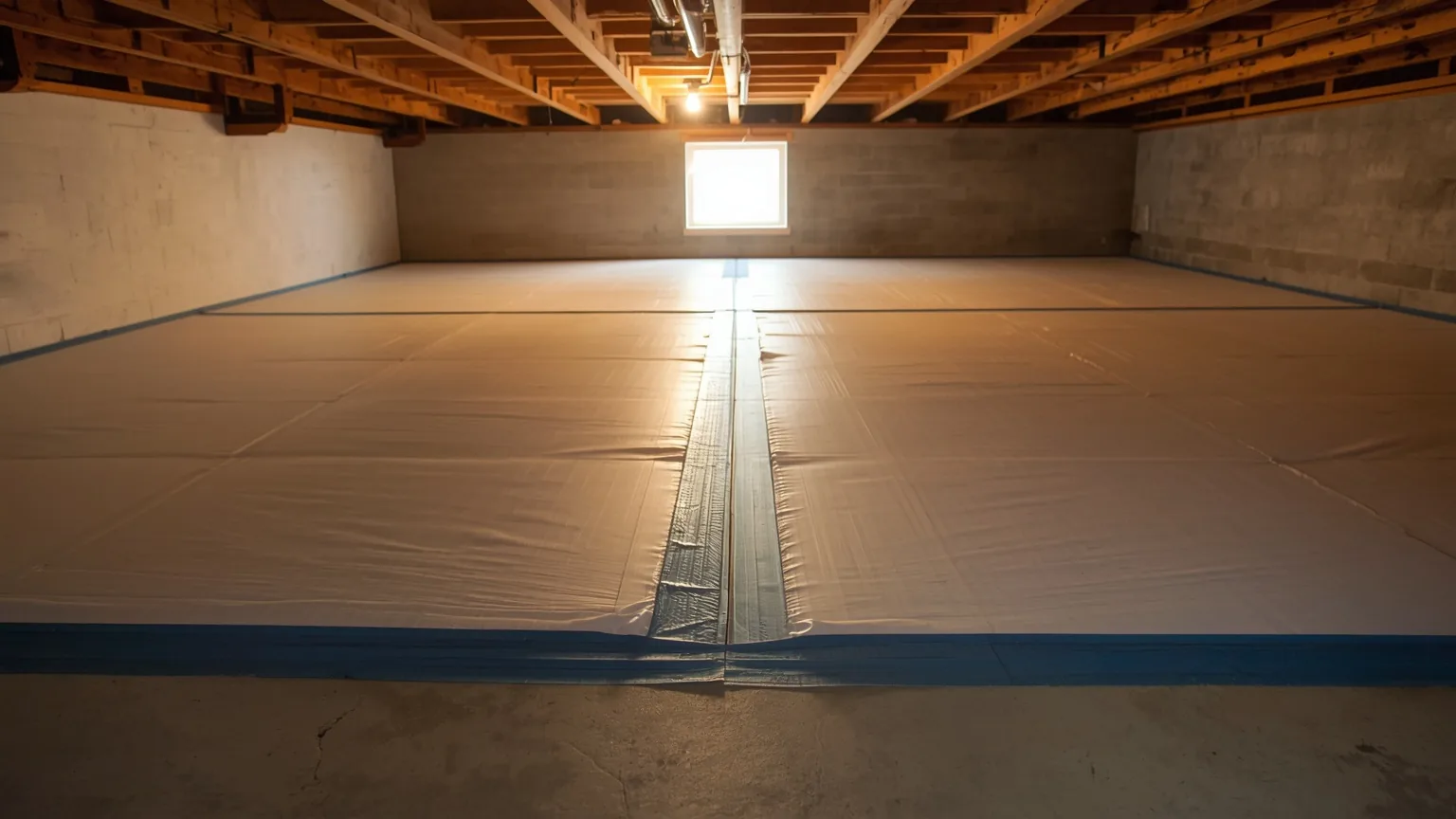
Encapsulation seals the crawl space off from the ground and from outside air, then controls the humidity of what is left. It is the right answer for a chronically damp crawl space and the wrong answer for one that is actively flooding.
Crawl Space Moisture Control
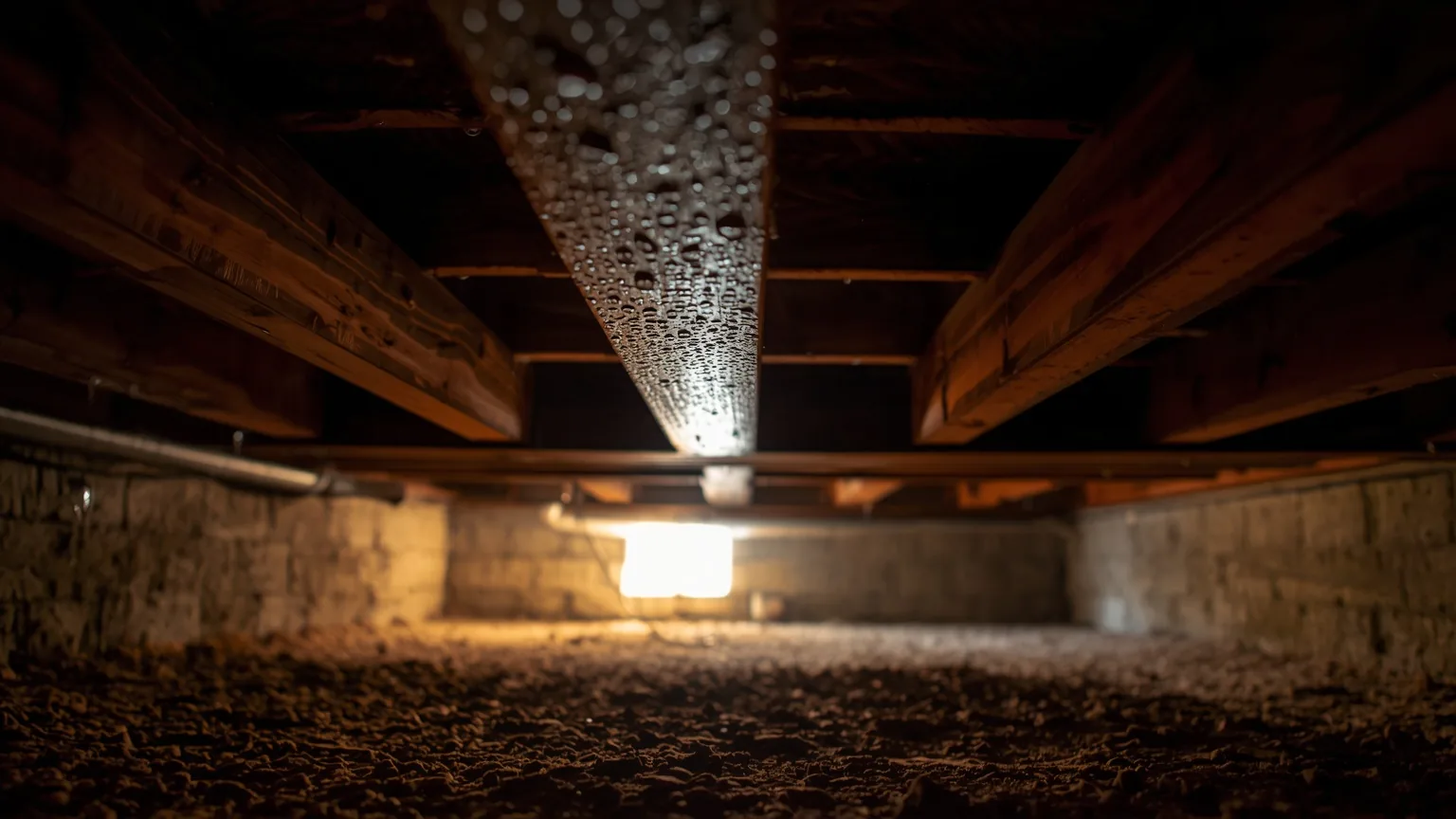
Moisture control is not one product. It is the question of which of four sources is putting water into your crawl space, because each one has a different answer and buying the wrong one is how people end up doing this twice.
Find out what is actually causing it.
Someone gets under the house, takes moisture readings, and writes the scope down before a price exists.